Friday, April 23, 2010

Kicking our ash

You might have caught on the news that we've been having some difficulties here in Europe in the last week.
Flights are now open, and authorities have decided that they overreacted to the ash cloud that Iceland sent our way a week ago.
However, there is another volcano near the one that exploded that often erupts when the other one does.
This volcano, news quotes suggest, would sent out TEN TIMES the amount of ash as the first volcano, and probably would have us riding in horse and buggies by the time it's through.
So, for those buying plane tickets to Europe this summer, a suggestion. Make certain that you understand how such an eruption would affect you financially if your plane flight is canceled. Mother Nature can be fickle.

Tuesday, April 6, 2010

Meie pulmakommetest / About our wedding


Eesti pulmakombed on teatavasti üsna rikkalikud - mängud, väravad, ametid ja nii edasi. Kas nüüd kurbuseks või kergenduseks, aga meie otsustasime neist loobuda. Kommetest on palju kirjutatud, aga sedakorda jäävad need mängud mängimata. Mis ei tähenda, et rõõmu koosolemisest ja meie jaoks olulise hetke tähistamisest võiks väheseks jääda.

Eriliseks teeb meie päeva see, et lisaks kahele erinevale inimesele saavad kokku ka kaks kultuuri. Siin mõned mõtted, mis võiksid abiks olla:

  • laulatus. Tseremoonia saab olema eesti traditsioonide kohane. Pruutpaar kõnnib altari ette õpetaja järel, pruut peigmehe vasakul käel. Tseremoonia järel on pruut paremal käel (ehk et jõujooned on paika loksunud). Laulud ja kõne peaksid olema mõlemas keeles, nii et kõik saaksid toimuvast osa. Laulatus kestab umbes pool tundi. Seejärel saate tasapisi hakata samme seadma Õpetajate Maja poole, kus kell 17 algab vastuvõtt.
  • lilled, lilled, lilled. Eestlased armastavad lilli ja kingivad neid igal võimalikul juhul. Sünnipäevadel täiendavad lilled kingitust, ja need antakse alati üle paberist välja võetuna, et kogu ilu oleks näha ja nuusutada. Üks meie värvidest on sirelililla, seda tooni, nagu oli kutsel pael. Võimalusel palumegi teil vaadata just seda tooni või sellega haakuvates toonides lilli. Teie toodud õitega kaunistame lauad Õpetajate Majas.
  • parim kink mahub ümbrikusse ehk meid rõõmustaks kõige enam, kui teeksite panuse meie eesseisva pulmareisi fondi.
English:

A traditional Estonian wedding has many customs and traditions: games, road blocks, changing diapers, chopping wood, bridestealing, and weddings that usually lasted for three days. You can read about these customs here (be warned that at the end of the page you see what comes next after wedding - LOL). For your relief or sadness, these games will not be a part of our wedding.

What makes our day even more special is that two cultures will be joined. It is sometimes tricky to find the best way and balance, and here are some tips for you as well:
  • wedding ceremony. We will follow Estonian Lutheran traditions here where bride and groom walk together to the altar when the ceremony starts. When going, the bride will be at groom's left hand, and after the wedding the bride will be on the right hand (note the power change here :). Songs and speech should be in two languages so nobody would feel left out. Ceremony will last about 30 minutes. After that you can enjoy a hopefully summery old town on your way to the Teachers' House where the reception will start at 5. It is about 7 minutes on foot.
  • flowers, flowers, flowers. Estonians love flowers and love to give these for almost any occasion. In birthdays you are always expected to bring a present AND flowers. Flowers are always unwrapped before given, so that the whole beauty is out in the open. Flowers are natural part of all weddings. Usually it works so that when the ceremony is over, everybody comes and congratulates the bride and groom, and gives flowers (there are flowergirls assisting the couple). As one of our wedding's colors is light purple or lilac, it would be wonderful to bring flowers that match the color. We will use these flowers to decorate the reception hall at the Teachers' House.
  • it is said that the best present fits into an envelope. Therefore we would be very happy if instead of traditional present - we don't need any blenders - you would make a donation to our honeymoon fund. We don't have any certain destination in mind yet, but we aim for the sun.
Please check back later for more tips and thoughts!

Saturday, April 3, 2010

Indrek's star turn

Kristel's brother gets some TV time in a fictional parody as the unemployed Estonian.


Monday, March 29, 2010

Estonia? What the heck?

Estonia is a nation that many Americans have probably only heard a passing reference to. Heck, a lot of EUROPEANS are fuzzy on the details.

One reason is it's small (about a quarter the size of Kansas), and it only has 1.3 million in population, and had the misfortune to be assimilated into the Soviet Union following World War II.

People have lived in Estonia since the Bronze Age, in fact there are graves about 40 kilometers (20 miles east of Tallinn that you can visit that date back at least 9000 B.C).

Tallinn, the capital where the wedding will be, was first mentioned on a map in 1154. It was then called Kaleweny.

It took its first steps toward a true nation-state when Denmark conquered the territory in 1219. Since that time, it has been controlled by Swedes, Germans, and Russians. The country won its independence in 1918 following World War I, and then regained it in 1991 after the Soviet coup attempt against Mikhail Gorbachev.

Geographically, Estonia has always been desired by its neighbors because of its ports and as a link between east and west.

Estonians are part of the Finno-Ugric line of people, which includes the people of Finland, Hungary and people that live near the Volga River and the Ural mountains in Russia.

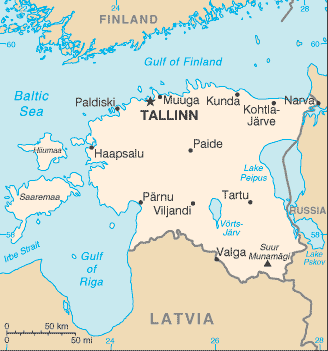
As you can see from the map, for travel purposes, you have several options. You can find a flight that goes directly to Tallinn. You can fly to Helsinki, Finland (Vantaa Airport), and then take a bus or taxi to the port, then take a 2-hour ferry to Tallinn. You can fly to Riga, Latvia. A bus from there to Tallinn is about 4 hours.

Wednesday, March 24, 2010

Estonian language/ Eesti keel


Want to endear yourself to Estonians? Learn some Estonian.

It's a difficult, almost impossible language, Scott thinks. There are 14 cases in the language, no gender, and no future tense (the joke is - no sex, no future). And pronunciation is paramount.

And it's even more difficult to learn because Estonians aren't used to hearing accented Estonian, like English speakers are used to hearing accented English. So if they can switch to English, they will.

The good news for foreigners is that everybody pretty much under 40 speaks English nowadays. But you're a guest in their house, so a few words wouldn't hurt your image as an Ugly American (which, compared to places like France, isn't so bad).

We would suggest the following, to show respect:

Tere (tear-eh): Hello. The first part sounds like tearing a book, not crying.
Ja: (yaa): Yes
Ei: (A): No
Palun: (Pall-un): Please. The nice thing about Estonian is it often sounds like it reads. Just put the stress on the first syllable
Aitäh: (Eye-tah): Thank you.

That's your Estonian language starter kit. We will continue lessons.

Read also: Douglas Wells, former Peace Corps volunteer brought to light the true roots of Estonian language.

Exchange rates / raha vahetamine

For foreigners coming to Estonia, dealing with a different currency can be a headache, and exchange rates fluctuate.

But no worries! This might be the best summer to come to Europe for a long time, thanks to Greece, which has been hiding budget deficits and driving the Euro down on the dollar. There's even some talk that the Euro might collapse completely. That would be ... exciting.

Estonia has its own currency, the kroon ('crown' or 'cr-own' is the correct pronunciation - 'crow-nee' is the plural).

The kroon is linked to the Euro at a fixed rate, so when the Euro drops, so does the kroon against the dollar.

About 10 years ago, when the dollar was really strong, 1 dollar would buy 19 krooni. A few months ago, it was 1 dollar for 9. Now it's about 11.7 and rising again.

We suggest if you are new to dealing with currencies, you print out some cheat sheets to help you, both in Euros and krooni, and any other country you are going to visit, before you come here.

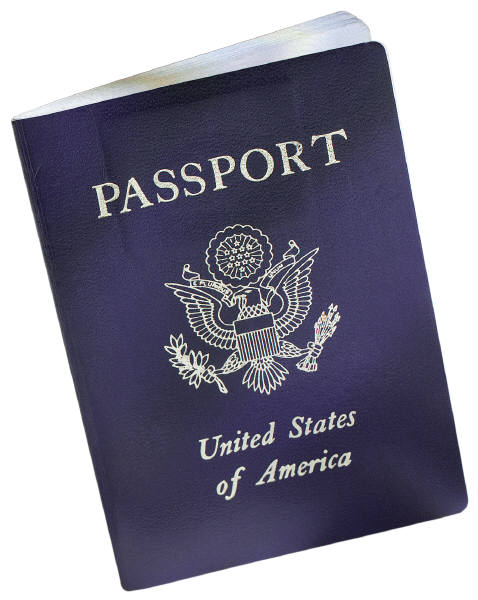
Passports / pass


For Americans, if you don't have one yet, this should be your first priority.

The procedure is simple. Go to a photo store or shop, and get a set of passport-sized photos taken of you.

As a rule, Scott believes, it's best not to smile. Some countries you might enter might consider you frivolous or an 'easy mark' (thinking about a certain Russian border guard). So he advises to keep a neutral expression.

Go to your local post office, fill out the forms they require, and pay the fees. As Scott remembers, you can select a one-month or a three-month option for delivery. Don't delay. We're already about a 100 days out from the wedding.

Every country in the European Union requires no VISA for Americans to get in, but you have to have a passport.